
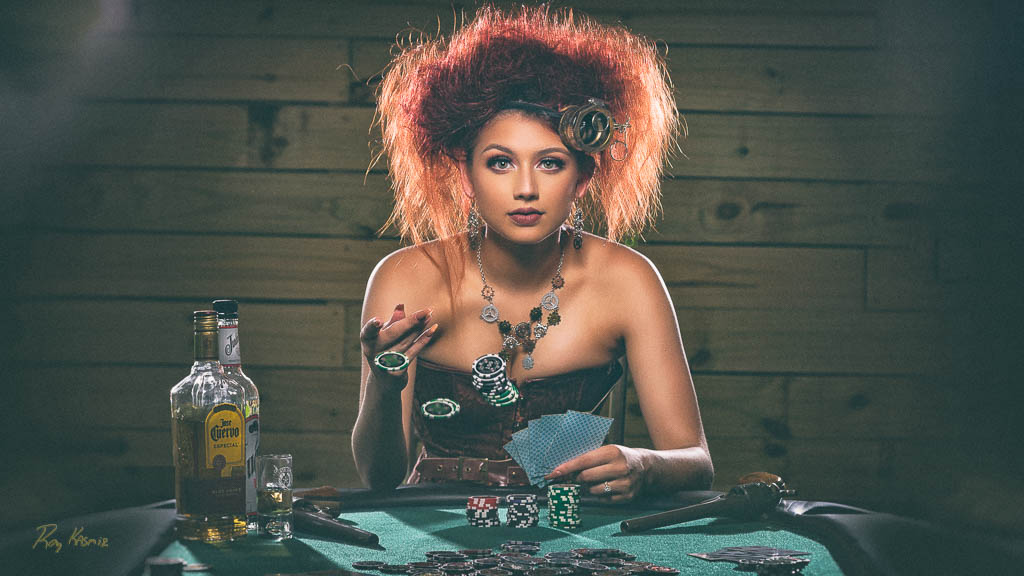
This photoshoot was designed as a study in story-driven portrait lighting. The goal wasn’t just to photograph models in steampunk wardrobe, but to create an environment where the light, props, and backdrop all worked together to suggest a narrative.
We built the scene around a poker table, using playing cards, stacked chips, whiskey bottles, and a few antique pistols to create visual tension and depth. Rather than over-styling the table, each prop was placed with intention—enough to guide the viewer’s eye without distracting from the subject. Behind the models, an old wood wall constructed from aged timbers added texture and separation, helping the scene feel grounded and believable.
Before bringing in the models, I focused on lighting the environment first. When setting up a more complex lighting arrangement, I find it’s helpful to test with a stand-in rather than rushing straight into final portraits. For the first image in this series, I used a fellow photographer from New Ulm, Texas—Andrew Heinsohn—to help me dial in light placement, shadow depth, and contrast. Using another photographer as a test subject made communication easy and allowed for small adjustments without breaking the flow of the shoot.
The lighting setup itself was intentionally simple but purposeful. Two strip lights were placed behind the subject, one on each side and just out of frame. These acted as rim lights, creating separation from the background and adding edge definition to the wardrobe and shoulders. For the main light, I used a beauty dish positioned slightly above the frame and angled down toward the face. This gave me controlled, directional light that shaped facial features while maintaining a dramatic falloff into the shadows.
One key lesson from this shoot was the importance of balancing multiple light sources without flattening the image. The rim lights were kept subtle—bright enough to outline the subject, but not so strong that they pulled attention away from the face. The beauty dish remained the dominant light, anchoring the viewer’s focus exactly where it needed to be.
Shoots like this are a reminder that learning happens best when you slow down and build with intention. By focusing on one lighting concept at a time—separation, direction, and mood—you can create portraits that feel cinematic while still being repeatable in future sessions. The same approach easily translates into creative senior portraits, where storytelling and dramatic light can help each session feel truly unique.
This same approach to lighting and storytelling translates beautifully into senior portraits. When a session is built around mood, texture, and intentional light, it allows seniors to step into something more than just a pose — it gives them a moment, a character, and a story that feels uniquely theirs.
Whether it’s a bold, cinematic setup like this steampunk shoot or something simpler and more personal, the process stays the same: start with the story, shape the light with purpose, and let the environment support the subject rather than compete with them. For seniors who want portraits that stand out and feel different from the ordinary, this style opens the door to creative, one-of-a-kind images that go beyond the standard session.
If you’re a high school senior looking for portraits that feel artistic, dramatic, and tailored to your personality, this kind of creative planning is exactly what goes into every session I photograph.
#SteampunkPhotography #CreativePortraits #StoryDrivenPortraits #CinematicPortraits #PortraitLighting #StudioLighting #LightingSetup #BehindTheScenesPhotography #PhotographerLife #CreativePhotoshoot #FineArtPortraits #SeniorPortraits #SeniorStyle #ModernSenior #TexasPhotographer